Agricultural Spraying · 25 August 2026
What Is the Advantage of Drone Spraying in Agriculture?
Traditional spraying leaves tractor tracks across the field, while backpack sprayers are slow and labour-intensive. Drone spraying covers the area quickly with controlled dosing, aiming to reduce chemical use at the same time.
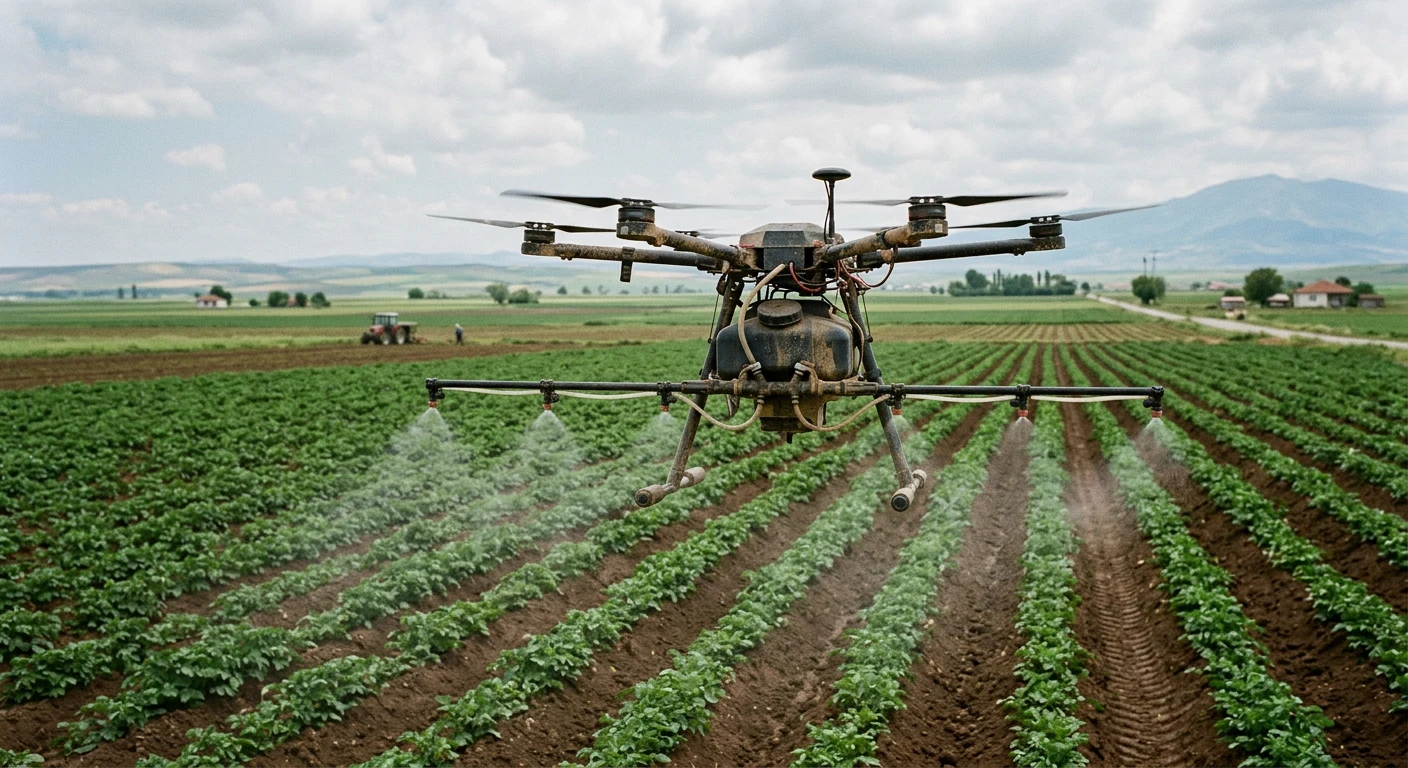
Timing is critical for spraying farmland — wind, humidity and temperature conditions only line up in a narrow window. Traditional methods (tractor, backpack sprayer) can struggle to cover a large area within that window, and a tractor's wheel tracks can physically damage the crop.
Drone spraying applies product to the field in a targeted, controlled dose, without physical contact with the ground.
Is drone spraying faster than traditional methods?
Within the narrow window of suitable weather, a drone can cover a wide area faster than a tractor, making it easier to take advantage of the time when spraying is most effective.
Does it actually reduce chemical use?
Targeted, low-volume application spreads the product over the crop in a more controlled way, aiming to reduce drift and unnecessary over-dosing. The exact reduction depends on the field's condition and the product applied.
How does it solve the tractor wheel-track problem?
Because a drone does not physically touch the field, no wheel tracks are left; this is an advantage especially on fields planted in narrow rows or with sensitive crop cover.
What types of terrain suit drone spraying?
Flat farmland is suitable, as are sloped or irregular plots that a tractor struggles to reach. A site survey assesses field size, obstacles and crop type before a spraying plan is set.
In short
Frequently asked
What terrain is drone spraying suitable for?
Flat farmland as well as sloped or irregular plots; a plan is set during the site survey based on the field and crop type.
Does it reduce chemical use?
Targeted, low-volume application aims to reduce drift and unnecessary dosing; the exact reduction depends on the field's condition.
Does it cause wheel-track damage?
No, a drone does not physically touch the field, so no wheel tracks are left.
Related services
Looking for a solution for your site?
Tell us what you need and we will assess feasibility together.