Facade Cleaning · 10 August 2026
Drone Facade Cleaning for Residential Complexes: Frequently Asked Questions
For site managers and building administrators, facade cleaning usually starts with two questions: is it safe, and how are the apartments affected? Here is how drone cleaning works on residential facades, in a question-and-answer format.
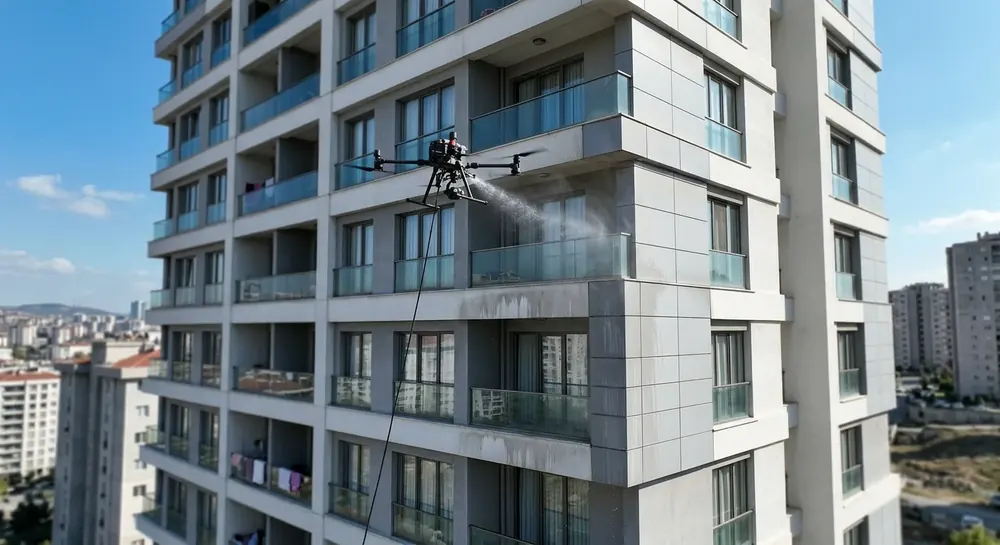
Facade cleaning on residential complexes calls for a different kind of care than a plaza or office building: people live inside, balconies and windows are in daily use, and shared spaces cannot be disrupted. Drone cleaning uses the same scaffolding-free, ground-operated method on these buildings too — but the questions residents ask are a little different.
Are balconies and windows affected during cleaning?
The team works from the ground and the facade is covered section by section; only the balconies and windows directly in front of the section being worked on are asked to stay closed temporarily. Work moves to the next section within minutes.
Do residents need to leave their apartments?
No. The work is done from outside, in the air; no one needs to be present inside or vacate the apartment. Keeping windows closed is enough.
Can the water or agents used harm the facade or plants nearby?
Pure (deionised) water is used, with organic and environmentally friendly agents added where the soiling calls for it; no harsh chemicals. This reduces both the risk of marks on the facade and the impact on surrounding planting.
How does site management plan the process?
A site survey assesses the facade's condition, height and suitable flight areas; the day and time are agreed with site management in advance, leaving time to inform residents.
For residents, in short
Frequently asked
Do residents need to leave their apartments?
No. The work is done from outside, in the air; no one needs to be present inside or vacate the apartment.
Are balconies affected during cleaning?
Only the balconies and windows directly in front of the section being worked on are asked to stay closed temporarily; work moves to the next section within minutes.
Does the water harm nearby plants?
Pure water and, where needed, organic agents are used; no harsh chemicals, which reduces the impact on surrounding planting.
Related services
Looking for a solution for your site?
Tell us what you need and we will assess feasibility together.