Aerial Security Patrol · 25 August 2026
How Does Drone Security Patrol Work on Large Sites?
Walking a wide site on a regular patrol schedule takes time and can leave blind spots. Aerial patrol covers the same site in far less time, from a much wider vantage point.
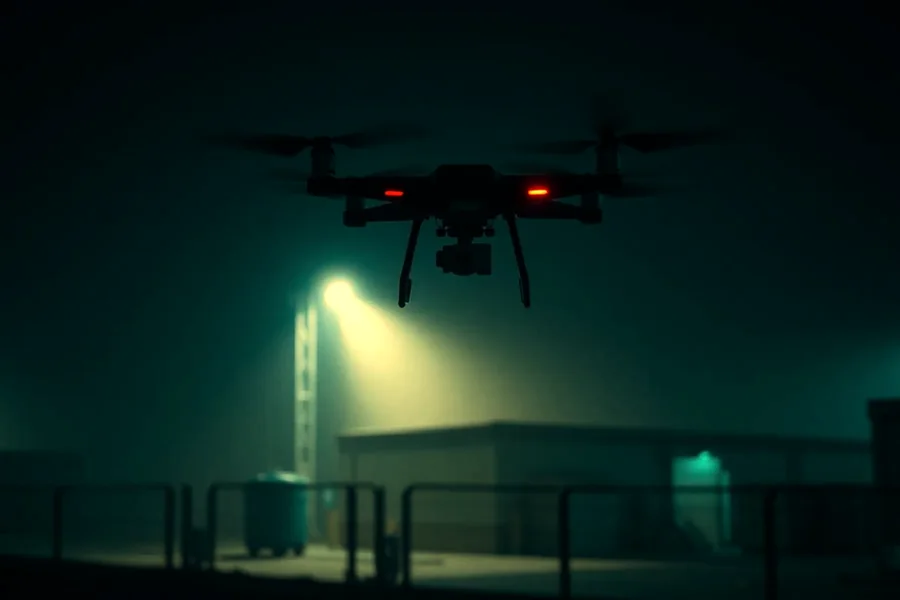
On large sites — factory complexes, construction sites, power plants, wide storage yards — security depends on spotting a perimeter breach, unauthorized entry or abandoned equipment in time. Foot or vehicle patrol struggles to cover the whole site frequently enough.
Drone patrol covers the same route on a repeatable path in far less time, and shows changes on site from angles that are hard to notice from the ground.
Does drone patrol replace foot patrol?
No, it works as a complementary layer. The drone scans the wide area quickly and flags points that need attention, while the on-site team or security staff responds to the location or follows the existing procedure.
Is night operation possible?
Yes, systems equipped with thermal and low-light cameras can carry out night patrols; this is especially useful for perimeter lines and open storage areas with limited lighting. Night flights are planned within the applicable permits and regulations.
How is the patrol route determined?
The perimeter, critical points (entrances, storage, equipment areas) and a repeatable route are planned together during a site survey. The route can be fixed or vary based on need.
How is something found during patrol reported?
The operator follows the live feed from the ground; when something unusual is noticed — movement at the perimeter, an abandoned vehicle or piece of equipment — it is reported immediately to the on-site team or security unit.
In short
Frequently asked
Does drone patrol replace security staff?
No, it is a complementary layer; the drone scans the wide area and flags points needing attention, while the on-site team responds to the location.
Can night patrols be done?
Yes, with thermal/low-light camera systems, night operation can be planned within applicable permits and regulations.
Is the route always the same?
Based on the critical points identified during the site survey, the route can be fixed or vary based on need.
Related services
Looking for a solution for your site?
Tell us what you need and we will assess feasibility together.