Energy Infrastructure Inspection · 25 August 2026
Why Inspect Power Lines and Substations With a Drone?
Getting a close look at a high-voltage line or substation seems impossible without shutting it down — but aerial inspection gets that same closeness without interrupting operation.
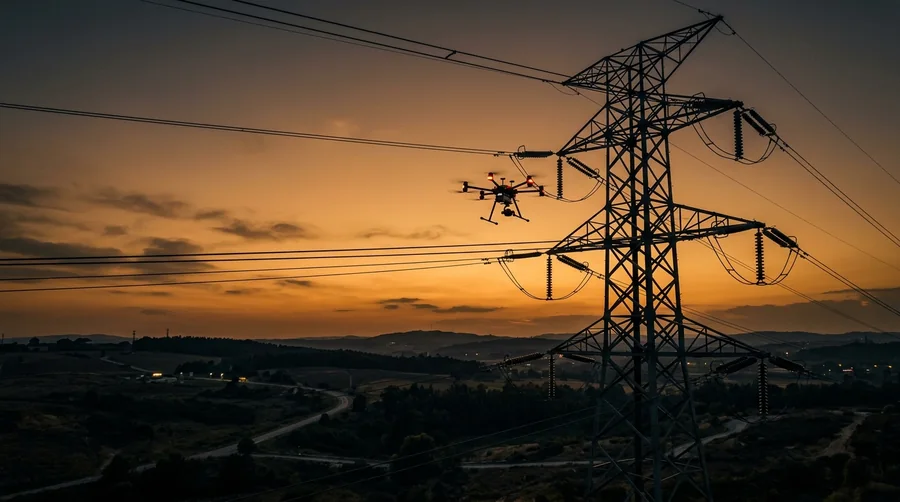
Power lines, substations and plant structures are among the hardest infrastructure to inspect visually, because of height, voltage and difficult access. Classic methods — telescopic binoculars, climbing, taking the line offline — either give limited visibility or require stopping operation.
Drone inspection gathers close-up imagery and, where needed, thermal data without physical contact with the line or equipment, and without stopping operation.
Does operation need to stop for a power line inspection?
No, inspection is carried out from a safe distance while the line or plant keeps running. This makes it possible to carry out regular visual checks outside of scheduled maintenance windows too.
What kinds of issues does visual inspection reveal?
Loose fittings, signs of corrosion, insulator damage and vegetation encroaching on the line can be spotted with high-resolution imagery; adding a thermal camera also reveals connection points running hotter than normal.
Why does thermal imaging matter?
A connection point usually runs hotter than normal before it fails; that rise in heat is invisible to the eye but can be detected with a thermal camera. A hot spot caught early can be addressed through scheduled maintenance.
What does the inspection report include?
Visual and, where relevant, thermal data gathered along the flight path are reported together with the location and imagery of the points identified; the site team can use this report to prioritise maintenance.
In short
Frequently asked
Does power need to be cut during inspection?
No, inspection is carried out from a safe distance while the line or plant keeps running; operation is not stopped.
What does the thermal camera show?
Connection points that typically run hotter before failing; this rise is invisible to the eye but detected with a thermal camera.
What is the report based on?
Visual and thermal data gathered during the flight, reported together with the location of the points identified.
Related services
Looking for a solution for your site?
Tell us what you need and we will assess feasibility together.