Facade Cleaning · 10 August 2026
Why Clean High-Rise Facades Without Scaffolding?
Scaffolding, a lift or rope access: the three classic ways to clean a facade all share the same problem — preparation, disrupted building operations and cost. Drone cleaning removes that load entirely.
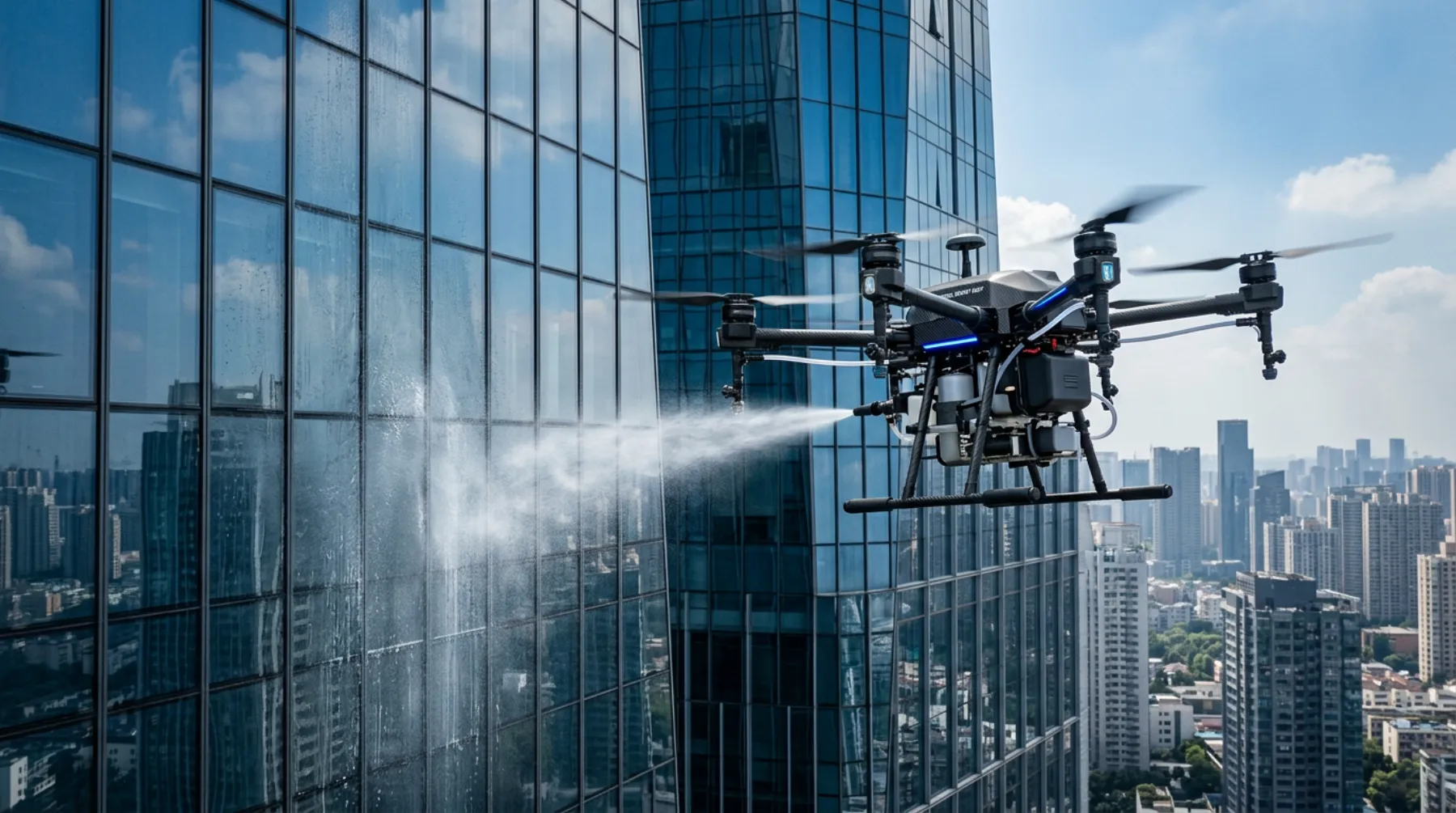
The facade of a plaza or office building is often its most visible surface. But classic cleaning methods — scaffolding, lifts, rope access — disrupt the building's operation during set-up: entrances are restricted, parking or pedestrian areas are temporarily closed, and set-up and dismantling often take longer than the cleaning itself.
Drone facade cleaning removes that preparation load. The team stays on the ground, water is applied to the facade from the air, and building management never has to close entrances.
What is the difference between scaffolding and drone cleaning?
Erecting scaffolding or a lift gives the team physical access to the facade, but that access is costly — the equipment has to be transported, assembled, secured and dismantled once the job is done. On high-rise buildings this preparation phase can stretch to several days.
With drone cleaning the team stays on the ground and preparation is finished within hours. High-pressure water is applied to the facade from the air while the team monitors from below.
Can glass and composite facades be cleaned by drone?
Yes — glass curtain walls, composite panels, aluminium and painted surfaces are all suitable for drone cleaning. The work is done with pure (deionised) water, with organic and environmentally friendly agents added where the soiling calls for it; no harsh chemicals are used. This reduces the risk of mineral marks after drying.
A site survey beforehand assesses surface type, soiling and suitable flight areas; very narrow gaps or cluttered surroundings can limit the work.
Does the building need to be emptied or its entrances closed?
No. The team works from the ground and the facade is covered section by section; only the area directly below the active section is temporarily secured. That difference matters most for hotels, hospitals and malls that cannot pause operations.
How often should plaza and residential facades be cleaned?
Frequency depends on the building's location (a main avenue, an industrial area, the coastline), the facade material and weather conditions. Buildings in high-traffic or industrial areas accumulate soiling faster. Rather than a fixed interval, the facade's condition is assessed during a site survey and a building-specific recommendation is given.
The difference at a glance
Frequently asked
Does the building need to be emptied for facade cleaning?
No, the team works from the ground and the building keeps operating; only the area directly below the active section is temporarily secured.
Can every high-rise be cleaned by drone?
Most facades are suitable; very narrow gaps, cluttered surroundings and certain weather conditions can limit the work. This is clarified during the site survey.
How is the price determined?
Price depends on area, surface condition and access; the calculator on the site gives an estimate, and the final price is set after a site survey.
Related services
Looking for a solution for your site?
Tell us what you need and we will assess feasibility together.