Thermal Inspection · 25 August 2026
How Does Thermal Imaging Detect Heat Loss in Buildings and Plants?
Where a roof or facade is losing heat is invisible to the naked eye. A thermal camera turns that invisible temperature difference into a colour map.
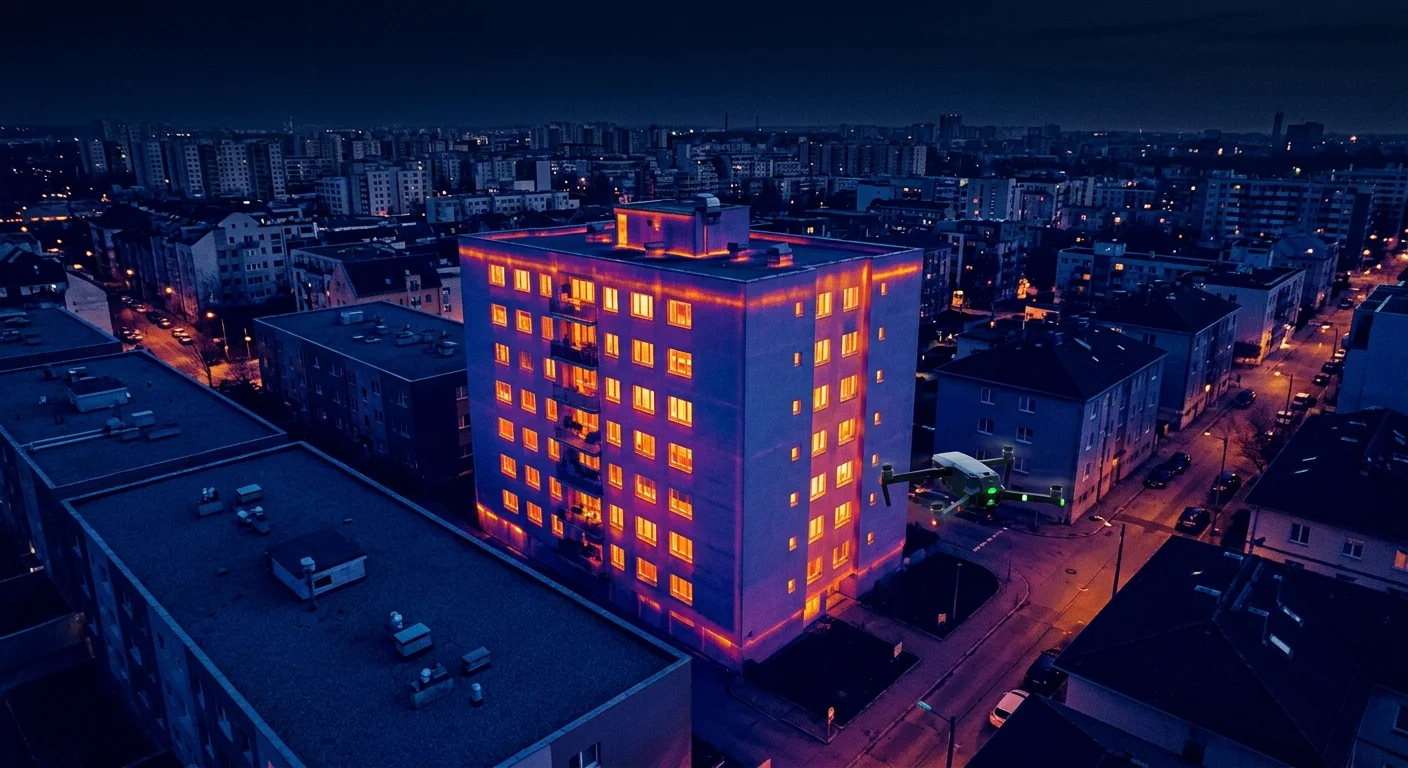
Problems like insulation gaps, trapped moisture or an overheating electrical connection usually develop without a visible sign — they are typically noticed only once the energy bill rises or a failure occurs. Thermal imaging makes these problems visible before they form or grow.
Aerial thermal inspection scans roofs, facades and wide plant areas quickly, mapping the temperature differences across them.
What exactly does a thermal camera show?
It shows the temperature difference between surfaces on a colour scale — warmer areas appear in a different colour. That difference can point to an underlying issue such as an insulation gap, trapped moisture, an air leak or an overheating electrical connection.
How are insulation gaps on a roof detected?
A section of roof losing heat shows a different temperature from its surroundings; this usually points to a spot where insulation material is missing, damaged or has absorbed moisture. The image shows which area needs a closer look.
What is thermal inspection used for on electrical panels?
A connection point usually runs hotter than normal before it fails. Thermal imaging catches that early warning signal, allowing it to be addressed through scheduled maintenance.
Under what conditions is thermal inspection most accurate?
Readings are clearest when there is a clear difference between indoor and outdoor temperature — for example, early on a cold day. The right time window and flight conditions are planned together during the site survey.
In short
Frequently asked
Can a thermal camera really see heat loss?
Yes, it shows the temperature difference between surfaces on a colour scale; that difference usually points to an issue such as an insulation gap or moisture.
What structures can it be used on?
Roofs, facades, electrical panels and wide plant areas.
When is the result most accurate?
When there is a clear difference between indoor and outdoor temperature; the right time window is planned during the site survey.
Related services
Looking for a solution for your site?
Tell us what you need and we will assess feasibility together.