Our Solutions
Thermal Inspection
Detecting heat loss, insulation defects and electrical hot spots with thermal imaging.
Get a Quote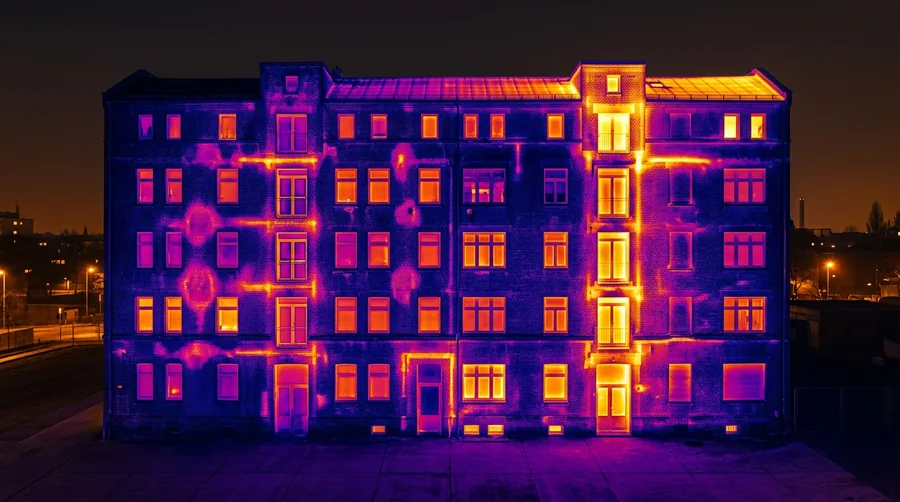
You cannot see with the naked eye where a building loses heat or which connection in a panel is running hot. By the time the problem becomes visible it is usually already expensive: mould, a rising energy bill or a failed connection.
Thermal imaging makes temperature differences readable on the surface. An aerial sweep covers a whole roof or facade in one pass, so thermal bridges, wet insulation and abnormally hot electrical connections can be flagged early.
- How we work
- Survey and timingThe right scanning window is chosen for the structure and target; conditions matter for thermal contrast.
- PlanningScan lines, altitude and imaging pattern are defined.
- SweepRoof, facade or target equipment is captured in thermal and optical imagery together.
- ReportThermal and optical frames are paired and findings reported with their location.
Where it applies
- Heat-loss scans of building roofs and facades
- Insulation defects and water-affected roof areas
- Hot-spot detection in electrical panels and field equipment
- Hot cells and string issues on solar panels
- Condition assessment before maintenance
Frequently asked
When is the scan flown?
Thermal contrast needs suitable conditions; most building scans are planned before sunrise or around dusk.
Who interprets the result?
Imagery is reported with a findings list and evaluated together with your technical team or solution partner.
Does thermal show every problem?
No. Thermal shows issues that create a temperature difference; for structural or visual problems it is used alongside optical inspection.
Other solutions
Get a quote for this service
Fill in the form and our team will get back to you the same working day.