Solar Panel Cleaning · 25 August 2026
How Much Energy Do Dirty Solar Panels Really Lose?
Dust, pollen and bird droppings quietly reduce energy output as they build up on a panel's surface — the difference usually only shows up in the production report. Cleaning without physical contact recovers that loss without risking damage to the panels.
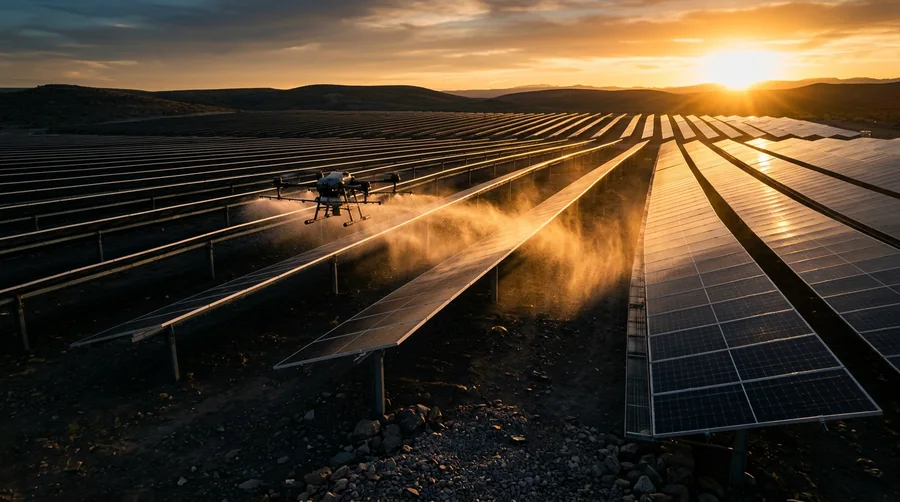
In solar power plants, soiling on the panel surface is one of the most overlooked causes of production loss. Because it builds up slowly and is hard to notice visually, the drop in output usually only becomes clear in monthly production reports.
Drone cleaning aims to recover that loss with targeted water application and no physical contact with the panels.
How does surface soiling affect output?
Dust, pollen, bird droppings and, in industrial areas, soot reduce the sunlight reaching the panel surface. Soiling rarely spreads evenly, so some panel rows can be affected more than others — leading to an uneven loss of output across the site.
Can brushing or pressure washing damage the panels?
Methods that involve physical contact — brushing, pressure washing — can scratch a panel's anti-reflective coating over time; even invisible scratches can reduce light transmission. Contact-free aerial application removes that risk.
How is water use kept low during cleaning?
Application is targeted — water is applied only to the panel surface, in the amount needed. This uses less water than traditional hose-based washing across a site, which is an advantage where water access is limited.
How often should a solar site be cleaned?
There is no fixed interval; the site's location (dusty area, near farmland, coastal), the season and the last rainfall all play a role. A site survey assesses the current condition of the panel surfaces and a site-specific maintenance schedule is recommended.
In short
Frequently asked
Does panel cleaning restore lost output?
To the extent that soiling was blocking output, cleaning the surface restores light transmission; the exact effect depends on how soiled the site was.
How is this different from pressure washing?
There is no physical contact, which reduces the risk of the panel coating being scratched over time.
How often should it be done?
There is no fixed interval; a site-specific recommendation is given during the site survey based on location and season.
Related services
Looking for a solution for your site?
Tell us what you need and we will assess feasibility together.